
Maintenance & Tune-Up in Horn Lake
Keeping a 1990s Horn Lake Garage Door Working the Way It Should
Horn Lake's garage doors mostly date to 1990, right in the middle of the area's building boom. Here's what upkeep looks like on that stock, four miles from our Southaven trucks.
- Licensed & Insured
- Same-Area Service Calls
- Upfront Pricing
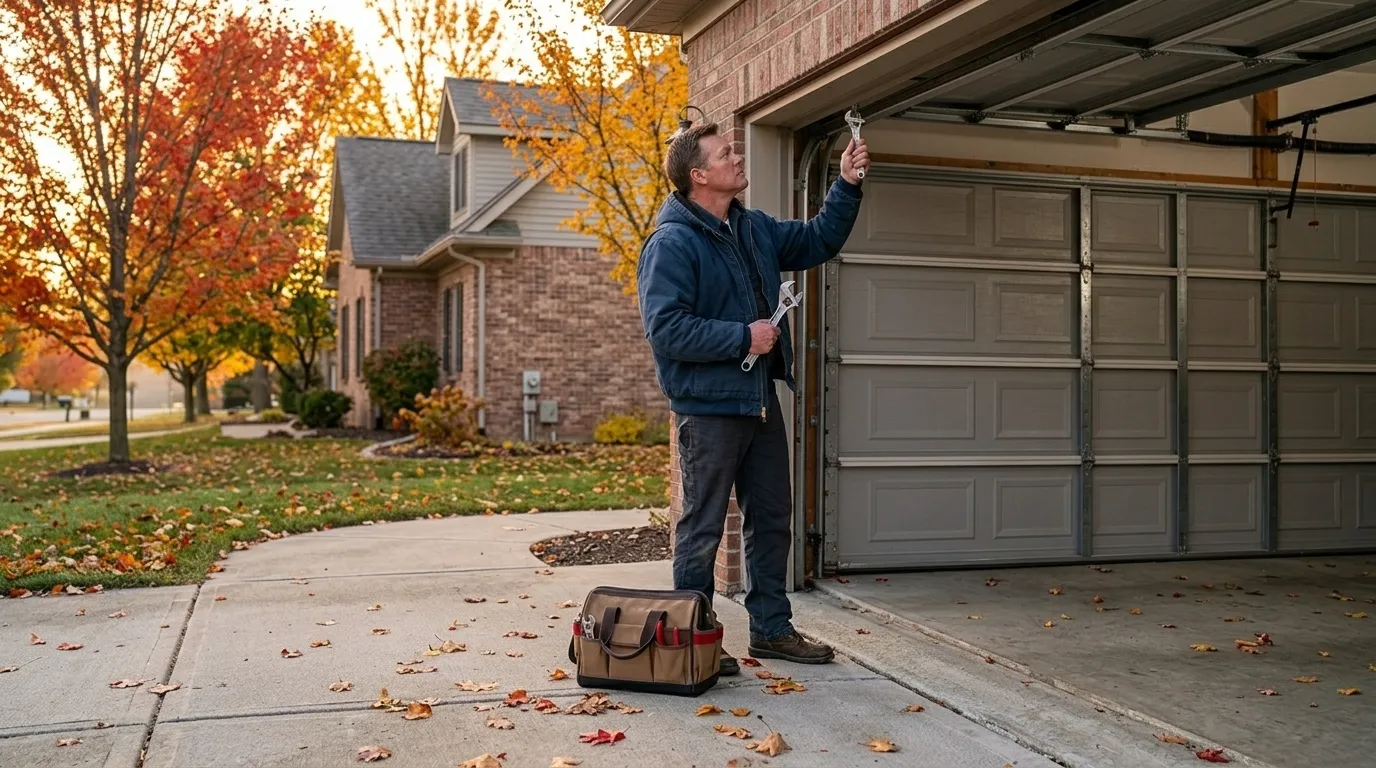
What Happens When You Call
-
1
Call or Request a Quote
Tell us what the door is doing and roughly how old the house is - that alone points us toward the likely part before a truck leaves.
-
2
On-Site Diagnosis
A tech checks the spring, cables, tracks, and opener in person and tells you plainly what is actually wrong.
-
3
Straight Price, No Surprises
You get a number before any work starts. It covers parts and labor, nothing added after the fact.
-
4
Fixed the Same Visit
Most repairs are done in one trip. If a part needs sourcing, we tell you that upfront instead of guessing.
How Long You Are Without the Door
Most houses on this side of Horn Lake went up around 1990, smack in the middle of the wider area's 1980-2001 building run. That means the door in front of you is very likely a steel sectional, either a single 9x7 or a double 16x7, hung on a torsion spring set that was standard hardware for that decade. Thirty-plus years on the same springs and rollers is a long run, and it's why maintenance calls out here tend to catch things before they become a stuck door rather than after.
We run out of Southaven, four miles up the road, so there's no branch office sitting in Horn Lake and we won't pretend otherwise. What that means for you is a scheduled maintenance visit, not a same-day emergency promise - if the door is already off track or the spring has let go, that's a repair call, and a different conversation about timing. Maintenance is the visit you book before that happens, and on a door this age, the parts worth checking are the ones original to a 1990-era build: torsion springs rated for their original cycle count, steel rollers that were never sealed-bearing, and lift cable that's been through three decades of temperature swings.
What Can Go Wrong
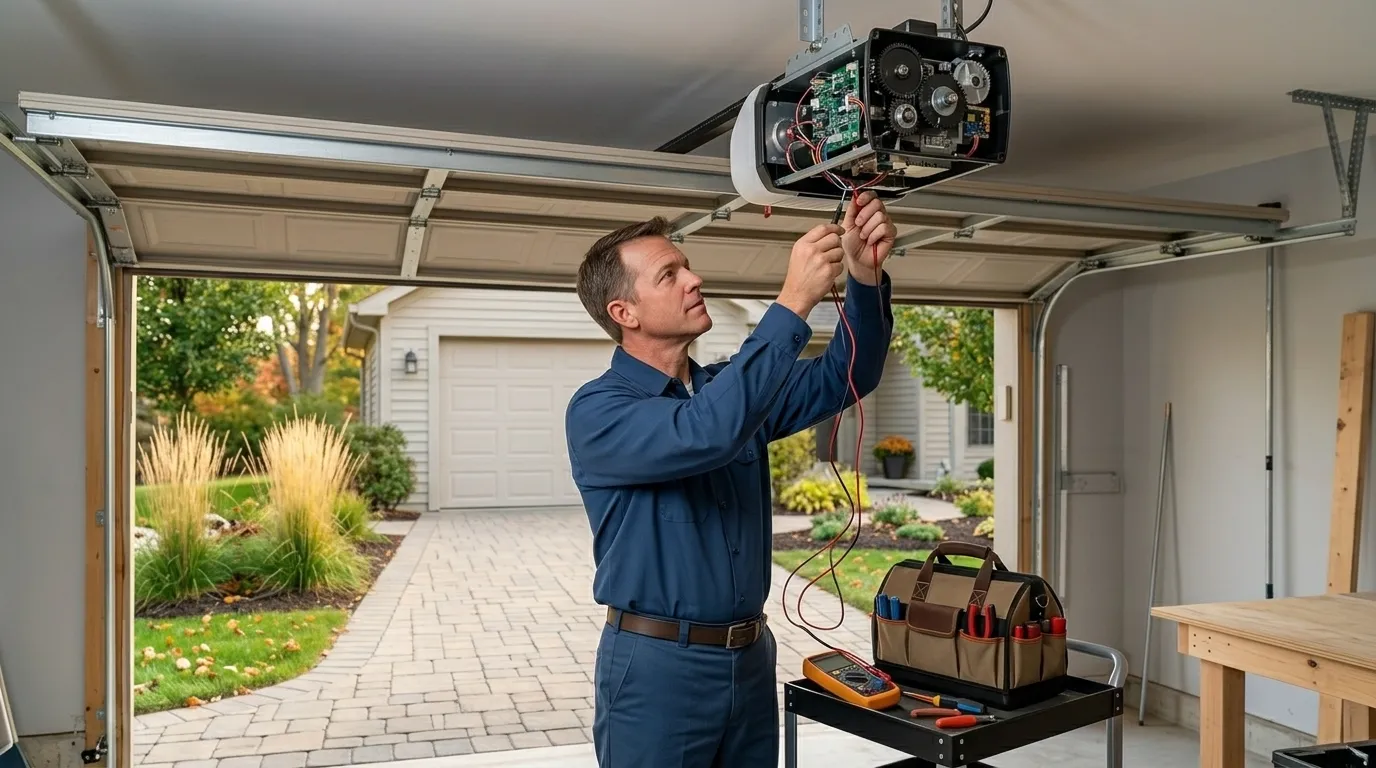
A door built around 1990 in a cold-moderate climate band spends three decades expanding and contracting with the seasons. The most common thing we find on these doors is spring fatigue - not failure yet, just a spring that's lost enough tension that the opener is doing more lifting than it was built to do, which wears the opener's gears faster than it should. Second most common: original steel rollers, worn to an oval shape instead of round, rattling in the track and pulling the door slightly off-square every time it runs.
Weatherstripping on doors this age is usually original or close to it, and on a cold-moderate winter it's often cracked or compressed flat along the bottom panel, which lets drafts and moisture into the garage. Hinges loosen in the same panel holes for thirty years and eventually the screw holes strip out, so the panel starts to sag at that hinge point.
None of this is dramatic on its own. Stacked together, it's what turns a five-minute adjustment into a full spring-and-track job a year or two later, which is the whole argument for catching it early.
The DIY Question
Some of this is fine to do yourself. Wiping down and lubricating rollers and hinges, checking that the weatherstrip still seals when the door's down, testing the auto-reverse safety feature by setting a piece of wood under the door and running it closed - all reasonable for a homeowner with a ladder and twenty minutes.
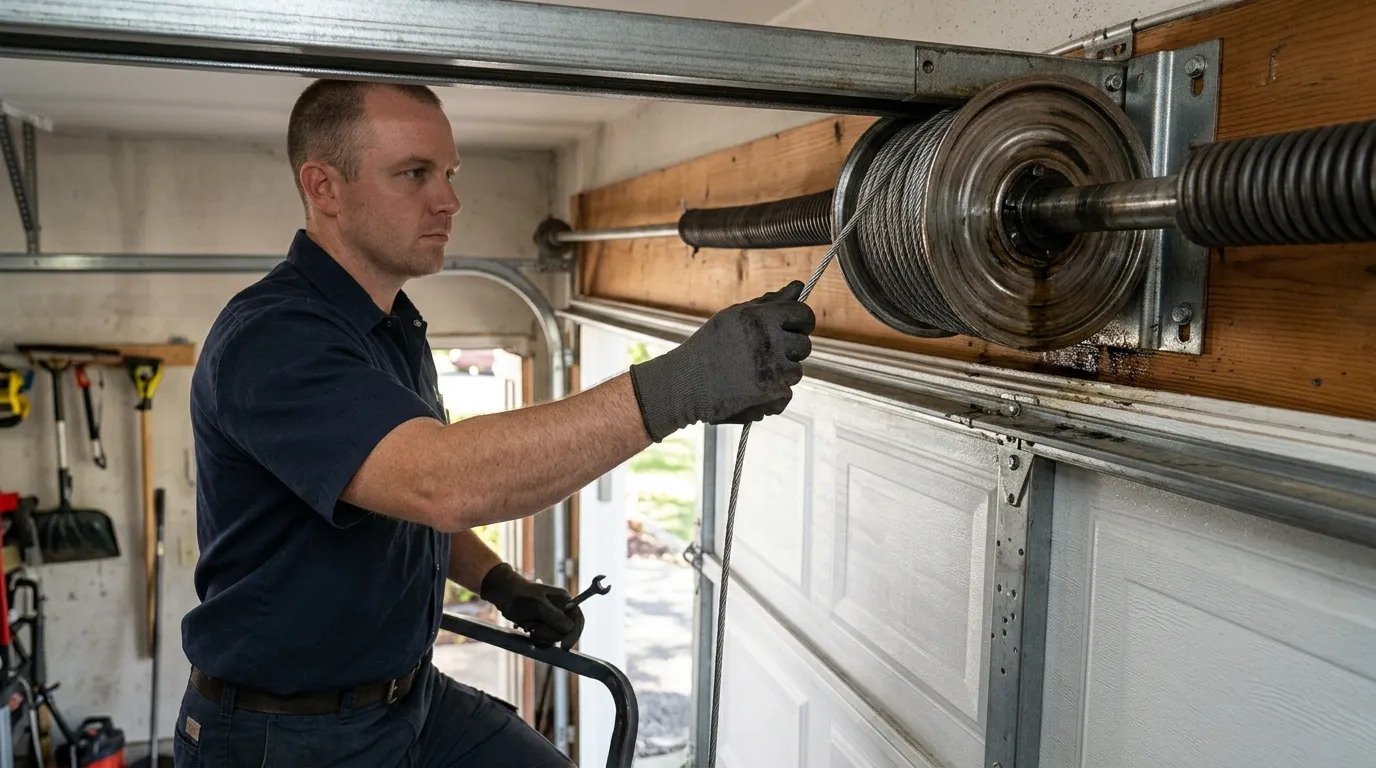
Torsion springs are where we draw the line, and we're straightforward about that. A spring holds enough stored tension to lift a 150-plus pound door, and on hardware this old the winding cones and set screws are often more corroded or worn than they look.
We've seen enough half-finished DIY spring jobs to say plainly: if the spring needs adjusting or replacing, that's not a Saturday project, that's a call. Balance testing - lifting the door halfway by hand and seeing if it holds - is also worth doing yourself, but only with the opener disconnected, and if it doesn't hold, stop there and call rather than trying to compensate by adjusting the opener's force settings.
Stocked Parts
For doors from this build era we carry the parts that actually wear out on them: torsion springs in the common residential sizes, steel and nylon rollers, standard lift cable, and hinges sized for 1990s-spec panel thickness. Weatherstrip and bottom astragal we stock in the common widths too, since that's the part every maintenance visit checks on a door this age.
Where we're honest about a limit: openers from this era sometimes used circuit boards or logic boards that aren't made anymore, and if yours needs one, that can mean a wait on a special-order part rather than something off the truck. On a door this old, once we're past the second or third small repair in a year, we'll tell you straight if a new opener costs less over time than keeping an original one alive. That's not us pushing a sale - it's just the math on parts that stopped being produced twenty years ago.
What the Repair Takes
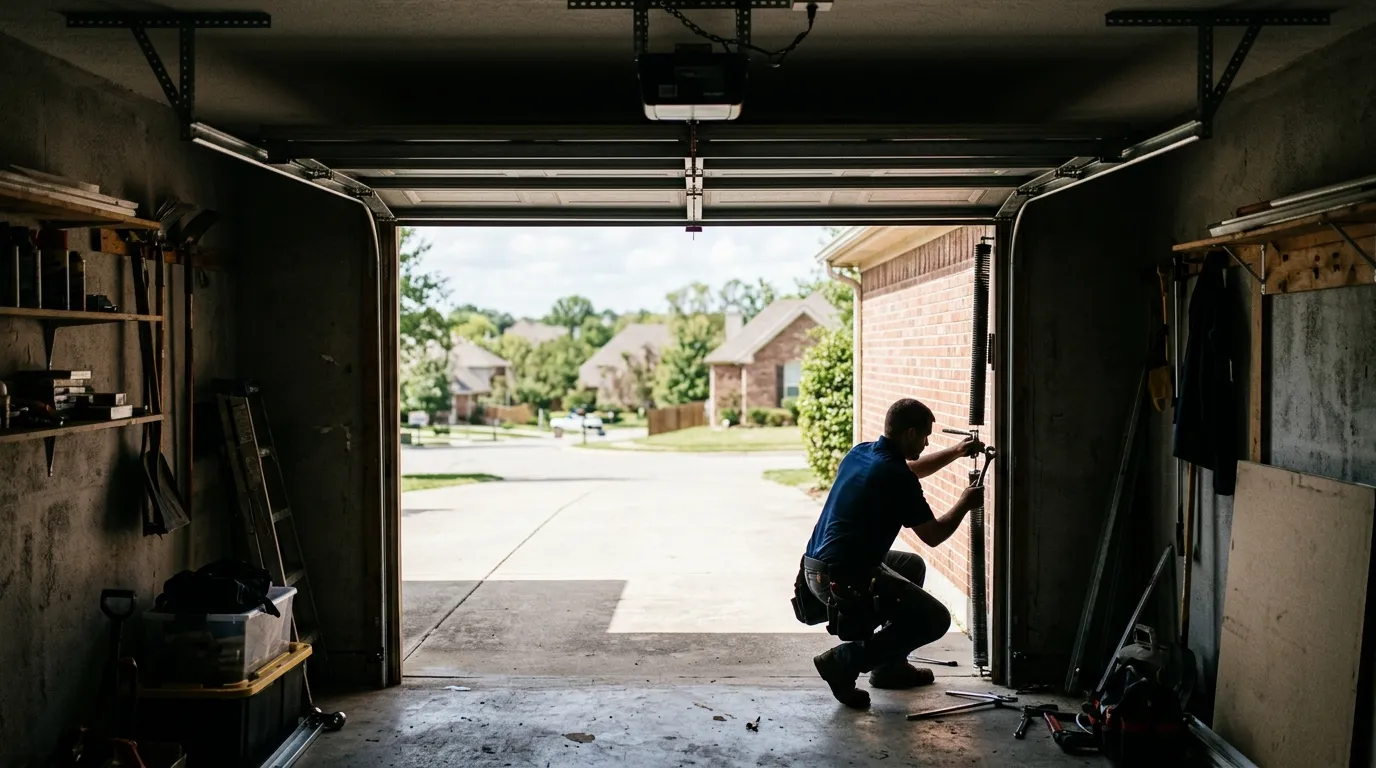
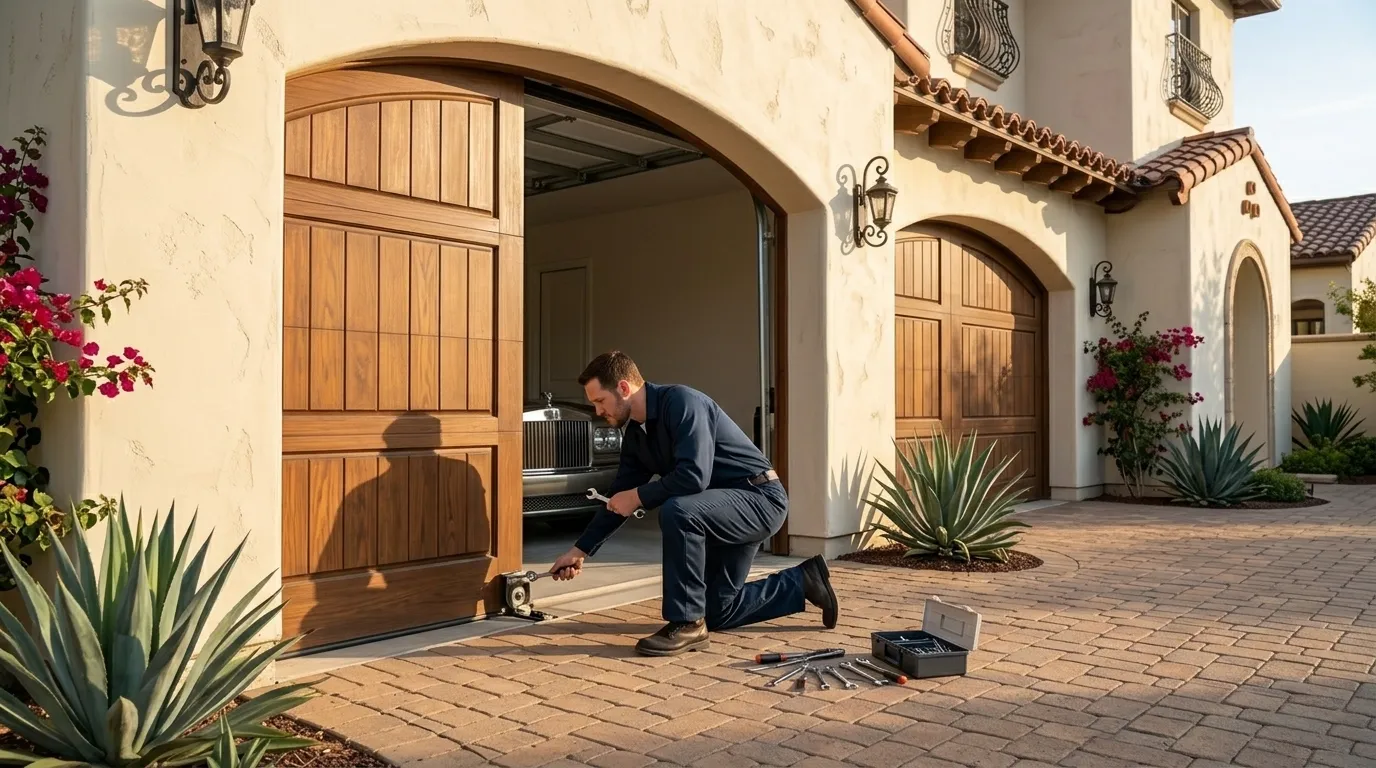
A standard maintenance visit on a door built around 1990 - the kind you'd book on a schedule, not in a panic - runs through balance, spring tension, roller and hinge condition, track alignment, cable wear, and the auto-reverse safety test. On a door that's been running fine, that's typically the whole visit: adjust what's drifted, lubricate the moving parts, flag anything that's close to needing replacement so you can plan for it instead of getting surprised.
If something's already gone - a roller that's seized, a hinge with a stripped hole, weatherstrip that's cracked through - that gets fixed the same visit if we've got the part on the truck, which for the parts listed above we usually do. Spring replacement, if it comes to that, is its own job: the old spring comes off, the new one goes on matched to the door's weight and size, and the whole door gets rebalanced afterward. We don't rush that step regardless of what else is on the schedule that day.
What It Costs
We don't have a posted price list for maintenance visits to share here, and we'd rather say that plainly than make up a number that doesn't hold up once a truck is actually at your driveway. What we can tell you is what drives the number: whether it's a straight tune-up with no parts replaced, or a visit where a spring or a run of rollers needs swapping, and whether the opener is original 1990s equipment or something newer.
Horn Lake sits in a household income range in the mid-$50,000s for the wider service area, and most of the maintenance calls we get here are exactly the kind of visit meant to avoid the bigger bill - catching a worn roller before it takes the track with it, or a tired spring before it snaps and takes a cable with it. That's the honest pitch for maintenance on a door this age: it's cheaper than what it prevents, even without a number attached to either side yet.
Talk to a Horn Lake Technician First
Describe what the door is doing and get a straight answer on what it likely needs.
Other Garage Door Services in Horn Lake
Recent Work in Horn Lake
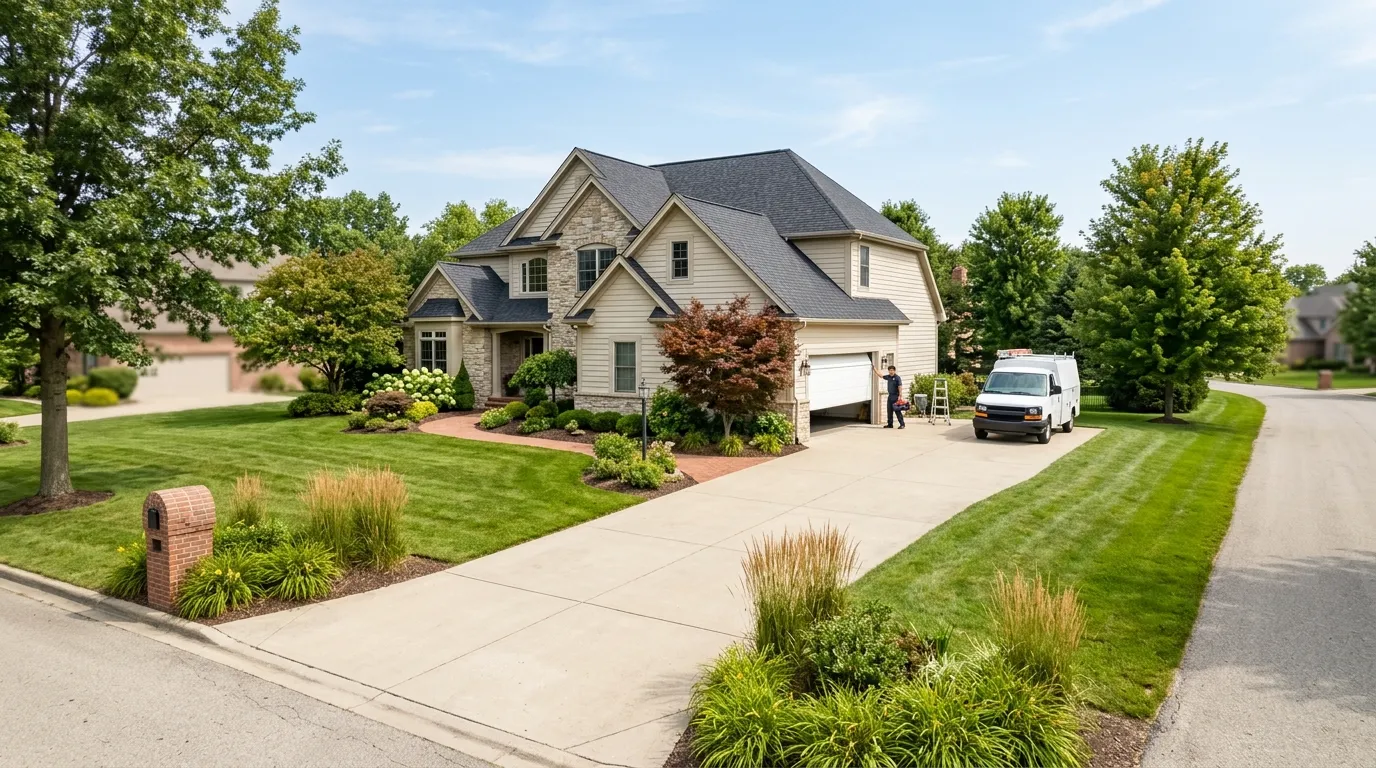
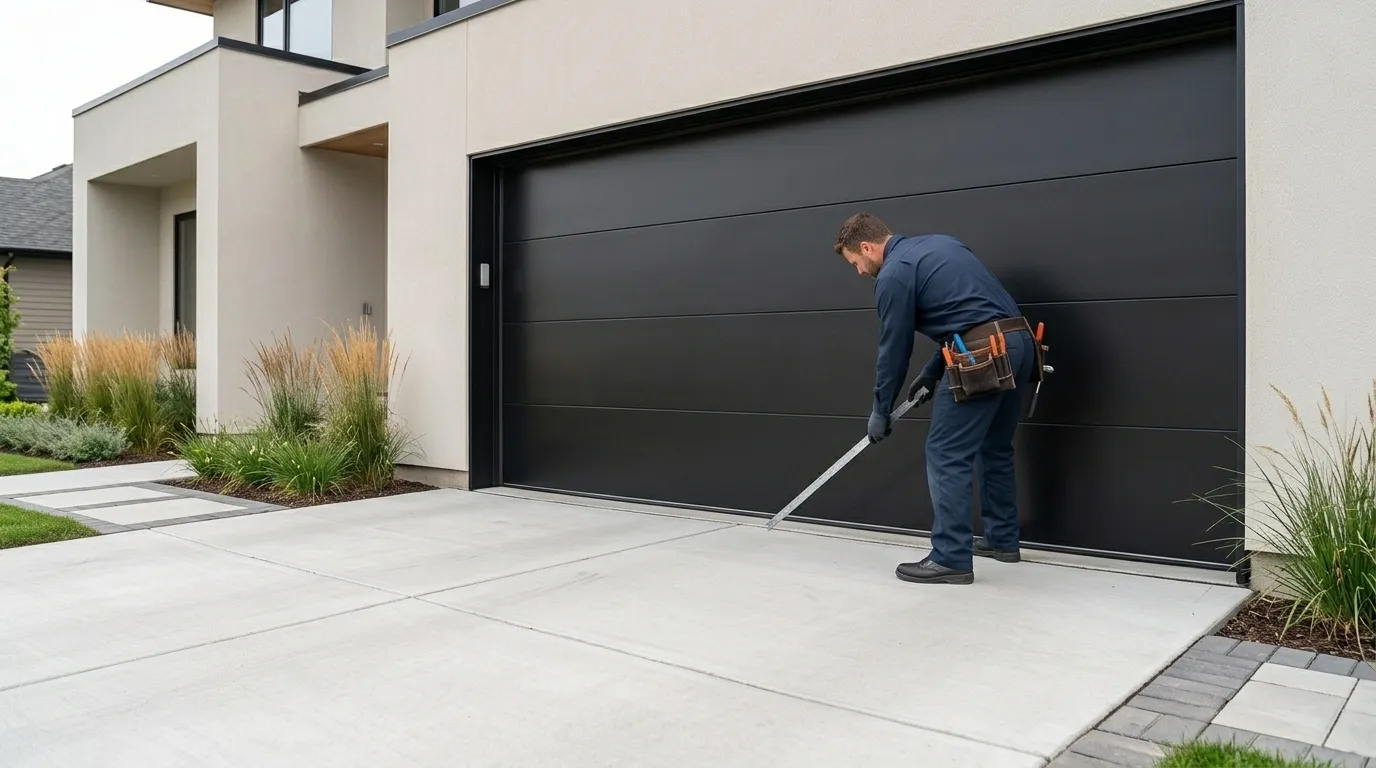
A look at jobs our crew has been on nearby.
Why Horn Lake Calls Us
Frequently Asked Questions
How old is a typical Horn Lake garage door likely to be?
Most homes on this side of Horn Lake were built around 1990, right in the middle of the wider area's 1980-2001 building run. If your house dates to that period and the door hasn't been replaced, you're likely looking at original torsion springs, steel rollers, and hinges from that era - all past a normal service life.
Do you have a branch in Horn Lake?
No. We run out of Southaven, about four miles away, and travel into Horn Lake for maintenance and repair calls. That's a short drive, not a same-day emergency guarantee, so maintenance visits here get scheduled rather than promised on the spot.
Can I do garage door maintenance myself?
Lubricating rollers and hinges, checking weatherstrip, and testing the auto-reverse safety feature are fine to do yourself. Torsion spring work is not - the stored tension can cause serious injury, and on 30-year-old hardware the winding cones are often more worn than they look. Call for that part.
What maintenance parts do you keep on hand for older doors?
For doors built in the 1980s-90s stock common to this area, we carry standard torsion springs, steel and nylon rollers, lift cable, hinges, and weatherstrip. Original opener circuit boards from that era are sometimes special-order, since some models aren't produced anymore.
Need Maintenance & Tune-Up in Horn Lake?
Call now for straight answers on cost and timing.